
Feature Image via Miru Collection
Hey there, and welcome to the first in what I think will probably be an endless diatribe of musings as I go down the rabbit hole with you all about Japanese shochu and what is now being referred to as “K-Sool” - traditional Korean alcoholic beverages that encompass soju, makgeolli, cheongju/yakju and fruit based ferments.
Writing this and the articles to come feels like returning home - I spend the past two decades writing about music for street rags such as Xpress, Drum, Beat all about music, and then launching Invurt, where I spent about a decade documenting the Melbourne and Australian graffiti street art scene in its heyday. I guess now its time to delve into my other passion and talk shit about what we do in way too much depth than is probably necessary!
Building Tano with Kev has been an absolute labour of love, and throughout it all there has been a pretty well worn conversation that happens whenever you tell someone you're running a distillery - they assume you're making gin! Its happened to me quite a number of times, and its fair enough, really. Over the past decade the market has been absolutely saturated with craft gin projects, and most of them follow a familiar script: local or native botanicals, a nice label, a compelling founder story about quitting a corporate job, etc.. and there are some awesome craft gins out there, we even have some on their shelves - there is absolutely nothing wrong with that story - it's just not our story.
We think what we’ve been building in Melbourne at Tano is genuinely special. A home, and homage, in our beloved Melbourne, for all things Shochu and K-sool. These are styles of alcoholic beverages with centuries of production history, deeply technical traditions, and almost zero serious representation at a commercial production level in Australia. Personally, I’ve spent well over a decade researching, translating scientific journals (the deficit of information on this stuff in English is real, peeps), and experimenting to get to a point where we felt confident enough to actually put this stuff out to the public. With Kev, and our many friends and helpers, we cultivate our own koji from scratch, we make our own nuruk, we steam our own rice. We run a dual fermentation process (known as SSF - Simultaneous Saccharification and Fermentation which is a fkn mothuful!) that most people drinking spirits in Australia have never seen, heard or tasted before - hardly anyone even knows it exists. And thats really cool man. That's actually why we’re doing this, and why its so bloody interesting, if extremely challenging.
Okay, so I meandered - and you’re here to find out about “Jagari” - one of our first releases - the beginning of many iterations to come whilst we dial in what we are doing. And oh man, there is a lot of dialing in to do …
Kokuto Shochu and why replicating it in Australia is a fucking nightmare
To understand what our Jagari shochu actually is, you have to start with kokuto sugar, and its delectable shochu offspring.
Down in Japan's Amami Islands a subtropical island chain sitting between the southern most main island of Kyushu and Okinawa, there's a style of shochu built around “kokuto”, which translates literally as black sugar, and if you haven't tried it you are sooo missing out man. Kokuto is a deep, rich and unrefined sugarcane juice that gets slowly boiled down until it solidifies into dense dark blocks - the critical word there is unrefined, all of the full molasses content stays in, all of the minerals, all of the raw earthiness of the cane. None of it gets processed out, and all of it carries through into the fermentation and the final spirit.
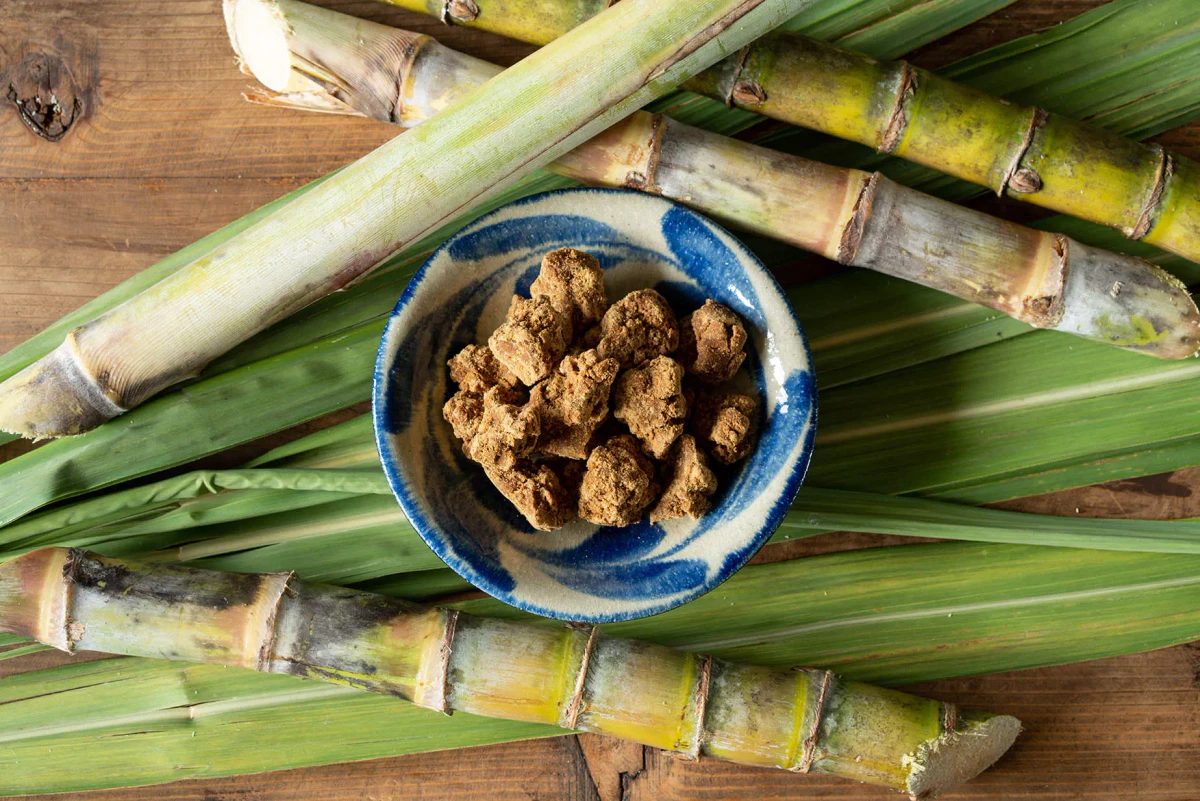
As a segway (yet again), there's also a genuinely interesting bit of legal history attached to this category. When the Amami Islands were returned to Japanese sovereignty in 1953 after years of US military administration, local distillers were suddenly faced with a dire problem: under the existing liquor tax law, their brown sugar spirit was going to be classified and taxed as a Western spirit, essentially as a rum, and that would have killed the Kokuto shochu industry in Amami overnight. So all the local producers petitioned the government, and eventually an amendment got passed - the category was protected, but with one very specific condition attached: to legally qualify as kokuto shochu rather than rum, the spirit has to be produced in the Amami Islands, and made from koji and kokuto sugar - full stop. That restriction still exists today, and it's one of the many geographically protected spirit categories (GIs) in Japan.
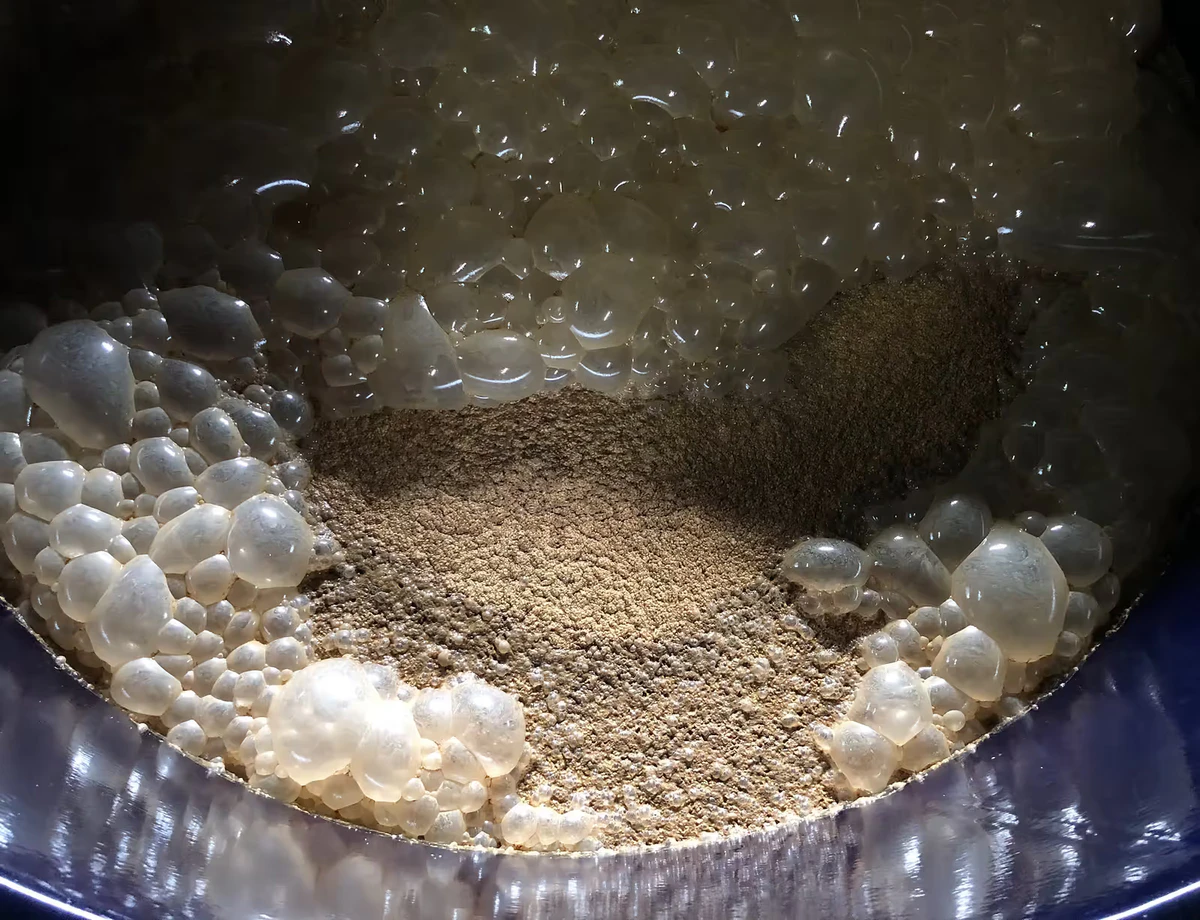
Image via Nishihiri Shuzo
The reason this matters for us is: we love kokuto shochu, but we don’t want to replicate it and make it the same, or confuse our products with it, as it deserves it own recognition - but we want to support the makers there and promote them and the category as much as possible, and, by damn, make something of our own that we hope will be just as tasty!
On top of this, trying to import genuine kokuto at commercial production volumes into Australia is a logistics nightmare, and financially it makes no sense - last time I looked a kilo of kokuto sugar in Australia on ebay was $100+ so ….noooope.
So given our love of kokuto, the fact that we wanted to make something like it, and support the producers and category and introduce people here to it, we started looking for a genuine structural equivalent. Something that worked the same way kokuto works, made the same way, tasted similar, but grown here in Australia as our own take and homage to the real thing …
Arjun to the rescue
What we found was up in Far North Queensland.
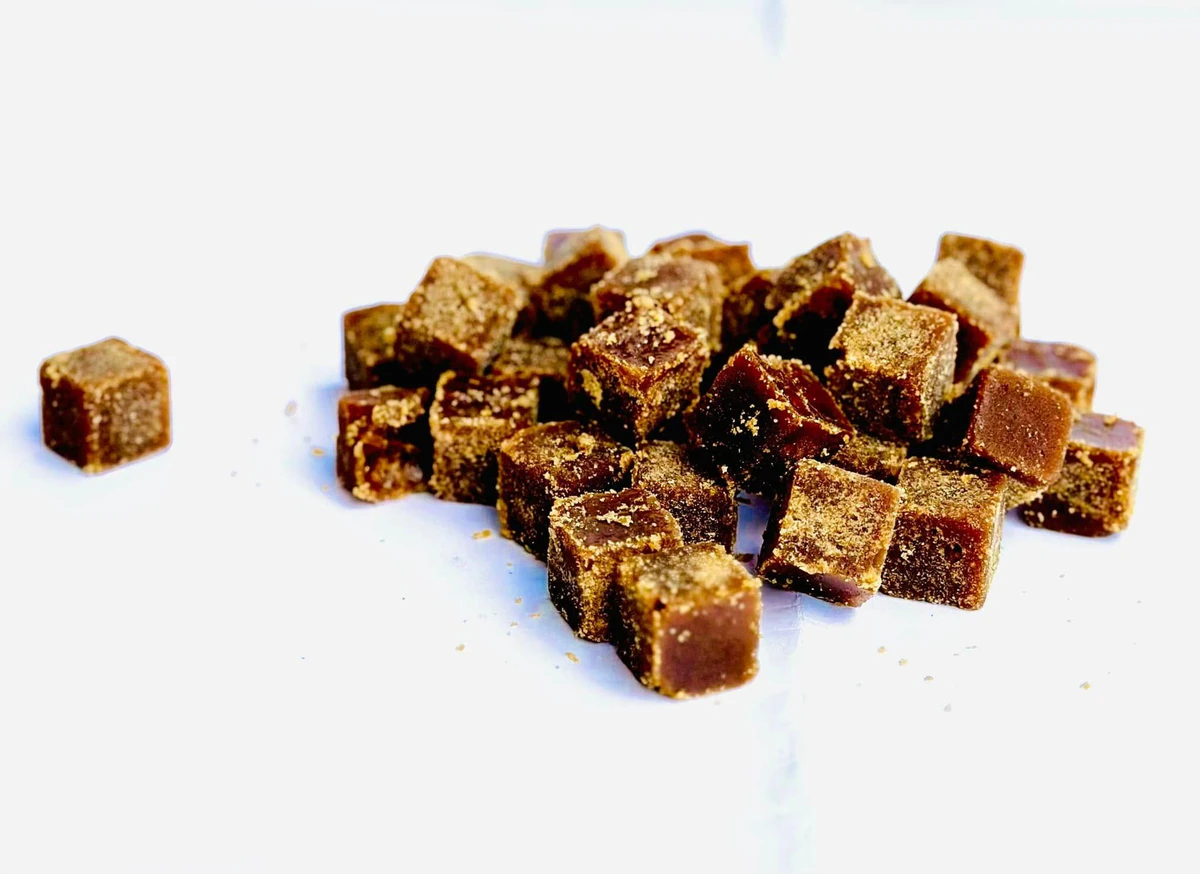
I spend way too much time going down rabbit holes in researching this kind of thing, and what we found was in Queensland, with the Cardwell Company, to be specific. I happened across an article on the ABC about a company operating out of the Tully region, who were purported to be Australia's first domestic jaggery producer - and from my previous research into kokuto shochu production techniques and how its made I knew that jaggery was analogous. Arjuns jaggery (which we call “Jagari” utilising the Japanese spelling) is made using the same slow-boil process as kokuto: raw sugarcane juice, cooked down until it sets solid. There is no spinning out the molasses, or adding it back in to make it brown. Theres no bleaching or refining - all those earthy minerals, the colour compounds, the deep brown character of the cane, all of it stays in the sugar. It's what the industry calls a non-centrifugal sugar, meaning that the processing method preserves everything the cane plant put into it, rather than stripping it back to pure sugary crystals like commercial white sugar does.
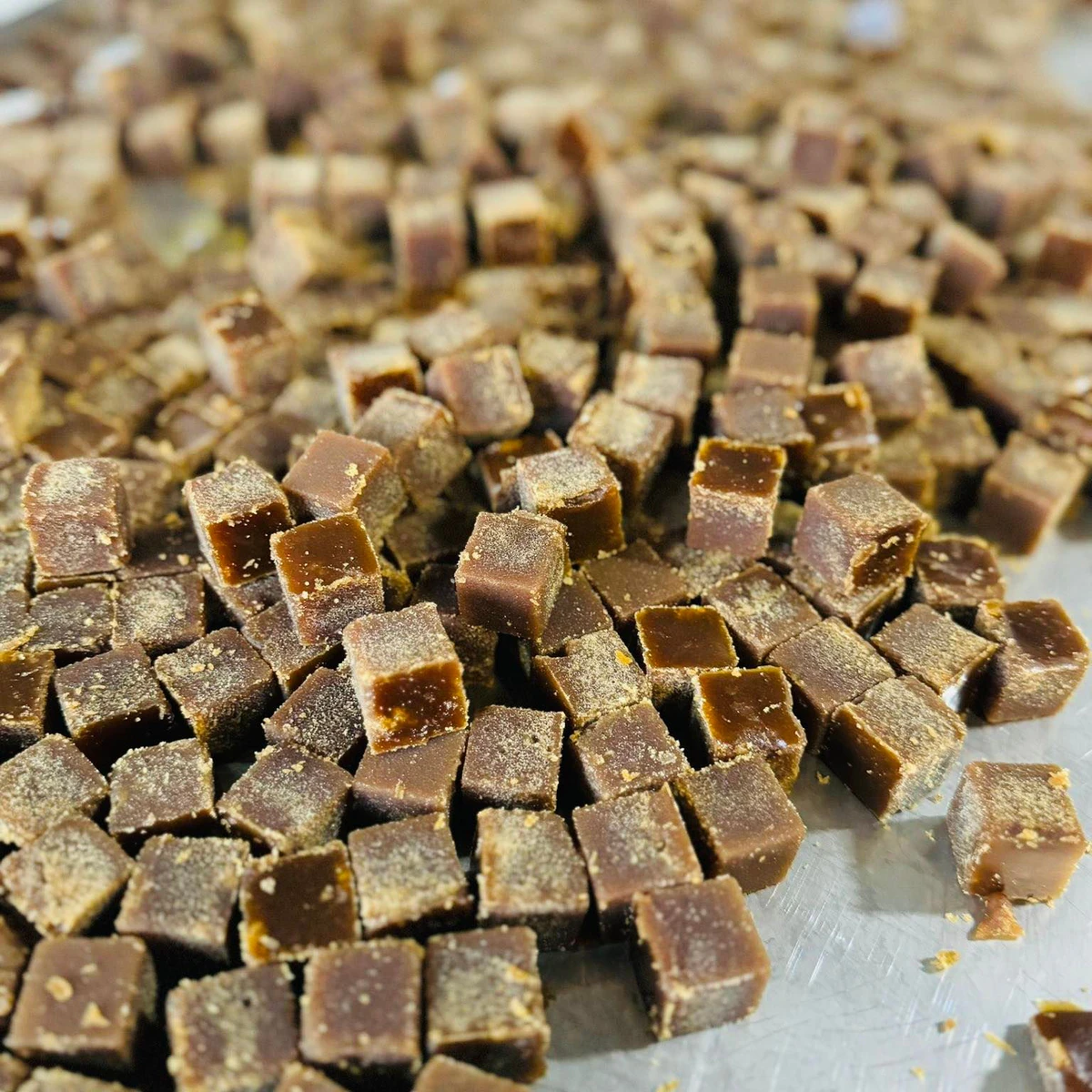
Simply put, kokuto sugar and jaggery, even though quite different and using very different species, are the same category of product. They're both produced from raw cane juice via the same slow-boil method. The names differ based on regional tradition, the Japanese version coming out of the Amami Islands and the jaggery tradition having roots in the Indian subcontinent - but structurally and chemically they're almost the same. The flavour compounds that make kokuto shochu interesting are the same compounds present in Arjun jaggery. They carry through fermentation. They carry through distillation. They show up in the glass.
Arjun Singh at the Cardwell Company is genuinely building something pretty singular and up there, driven by his passion for creating a traditional product right here in Australia, and this really resonates with us. The first Australian made jaggery, no chemicals, no colours, no preservatives, grown in Queensland - so we took that ingredient and put it into a production workflow that it was never designed for, and the result is a unique Australian riff on a Japanese tradition.
Why this is shochu and not rum
Okies, so we got all that - we know what kokuto and jaggery are now - but if you take refined sugar, ferment it with yeast in a single fermentation, and distil it, you make rum, right? Right. But, what we do with it is a fundamentally very different process, so no, actually.
Shochu actually uses a dual fermentation system, remember? The first stage of it, called the first moromi, is the koji fermentation. Koji is a mould grown onto a grain substrate, usually rice or barley, and it does two things that are critical to the whole process: it has a shitload of enzymes that break down starch into fermentable sugars, and it also also chock full of citric acid which drops the pH of the fermentation environment and protects the whole batch from contamination - our shochu yeasts are specifically bred to be able to handle these massive drops in pH. So we add water, yeast and koji and that's your first ferment. Then in the second stage (second moromi) you usually introduce your primary starch - however in our case we use the jaggery. So technically the koji itself isnt actually needed, as we are fermenting the sugar and it has nothing to break down, but it does break down the rice that it is grown on int he first stage and contribute mass amounts of flavour to the spirit.
Its the actual koji is what makes it shochu - if you take it out of the process, then yep, thats just rum and a completely different spirit.
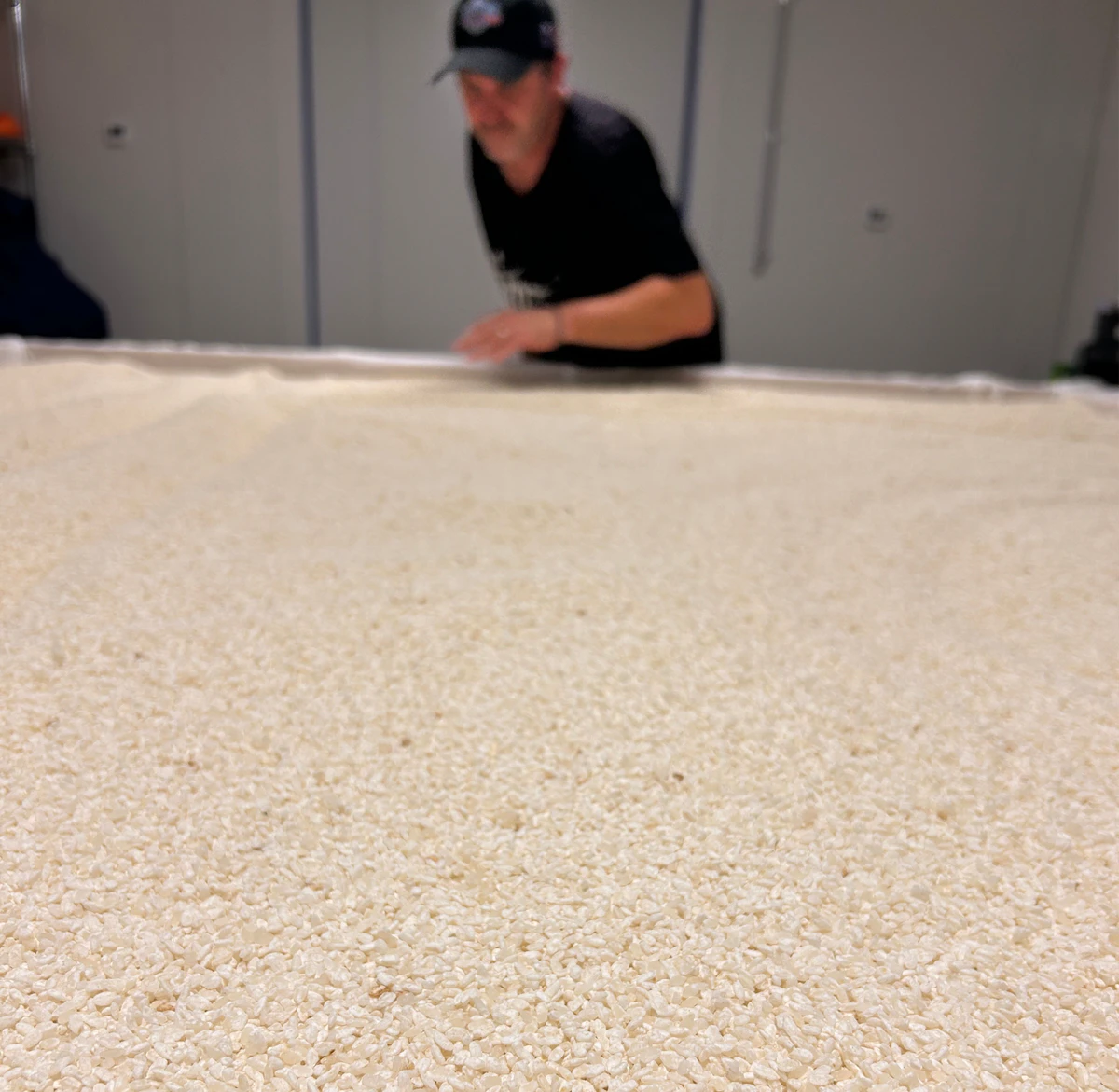
Growing koji in Northcote
All of our koji is cultivated on-site at the Northcote distillery, inoculated onto premium Australian Koshihikari rice and grown in our custom built kojimuro. It's a roughly two day process and the variables that matter are temperature, humidity and timing. Too warm and the mould development goes sideways. Too cold and it stalls. The production conditions in Melbourne are nothing like the subtropical breweries in Kagoshima or the Amami Islands that developed and refined these techniques across centuries, so we're constantly adapting, but we have over many trials found the perfect environment that our automated room can produce.
The specific mould strains we use dictates the entire flavour profile of the finished spirit - and this is where the Jagari project splits - we have dropped both the Black Koji and White Koji expressions of our Jagari at the same time because we wanted people to be able to taste that difference side by side with the same base ingredient underneath both of them.
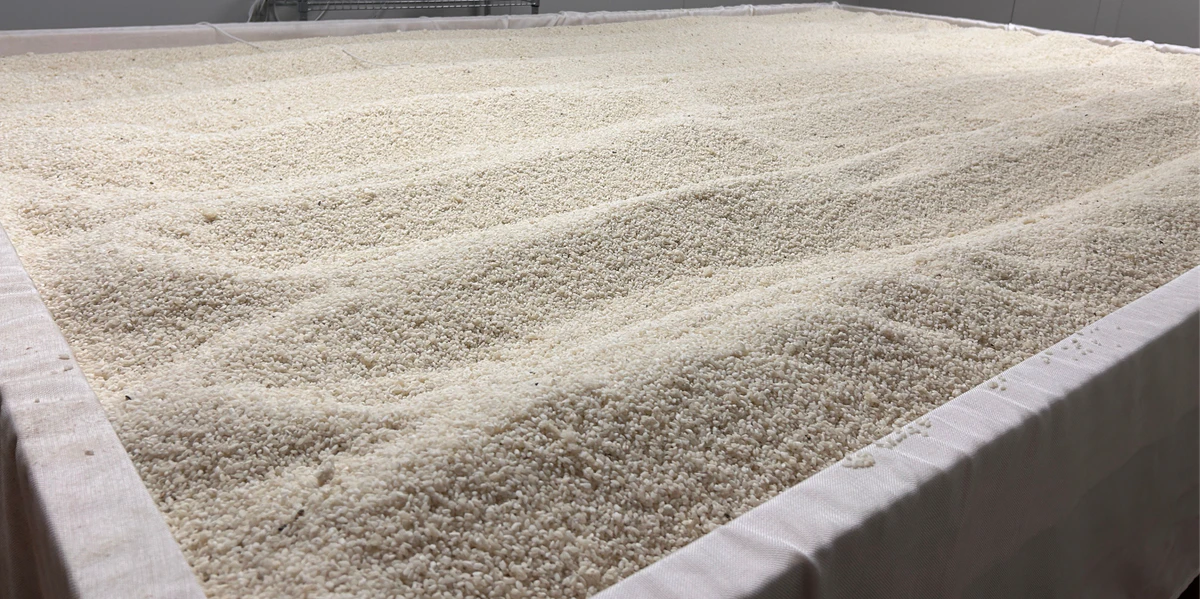
Black Koji
The black koji we use is Aspergillus luchuensis, the same strain that has been used to produce awamori in Okinawa since at least the 16th century, and that was introduced into mainland Japanese shochu production around 1910 when Kagoshima distillers brought it across from Okinawa and recognised what it could do.
The reason it became so widely adopted is due to its citric acid production. As it develops during cultivation it throws out a serious amount of citric acid, which pushes the pH of the fermentation environment down hard. That acidity is essentially the ferments immune system. It creates a hostile environment for the kinds of crappy bacterial contamination that can destroy a batch or make it less than what it should be, particularly in warm conditions or when you're dealing with temperature swings, which, given we are in in a Melbourne warehouse where the weather is unpredictable as fuck, is a basic requirement.
With jaggery as a fermentable substrate that protection becomes especially important. Its a mineral dense, molasses heavy medium that bacteria would have a great time with if you gave them the chance - our black koji doesn't give them the chance.
In the glass: the Black Koji Jagari is soft and structured. The heavy sweetness of the Queensland jaggery is cut cleanly. You get the depth and earthiness of the cane but the citric umami and acid character of the black koji slices right through the molasses richness and gives you something with real definition.
White Koji
White koji has a shorter history than black koji. In 1918 a researcher named Genichiro Kawachi isolated a natural albino mutant from a black koji culture, identified that it behaved differently, and eventually established it as its own cultivar. That mutant, now classified as Aspergillus luchuensis mut. kawachii, kept the acid production capability of its black parent but developed a significantly more efficient saccharification profile. In other words it breaks starch down faster, it's more forgiving to cultivate, and the enzymatic character it contributes to the fermentation produces a softer, more rounded flavour in the finished spirit. Most commercial shochu produced globally today uses white koji for these reasons.
In this version, the white koji lets the jaggery carry the conversation a little more. Where the black version cuts through the molasses character, the white version sits alongside it and lets it develop, however it is a much lighter and approachable spirit than the black. You still get the full depth of the Queensland cane, brown sugar, honey, a warmth that sits somewhere between vanilla and burnt caramel, balanced against the earthy umami of the Koshihikari rice koji underneath it.

The Bottle
When we first opened the distillery, local artist Tayla Broekman painted a massive Oni demon right at the entrance, and we knew at some stage we would want to use it for one of our products, so having her redesign it for our Jagari was a no-brainer. The Oni is a Japanese folkloric devil, and, well, sugar is the devil, so when it came time to build out the label the connection was already sitting right there.
Also, Tayla has developed all of our shochu labels so far - you’ll be seeing more of them in the future - and the Jagari sits within a broader series she's been building out with us. If you know her work from the Melbourne scene, you know what she brings: bold contrasting colour, pop surreal characters, and a layer of emotional narrative sitting just under the surface - which is exactly inline with how we want our products to be represented out in the world.
What it actually is
Firstly, we're not trying to reproduce an Amami kokuto shochu and pretend it came from Australia. That's not an honest project, it would be plain disrespectful - the Amami distilleries have been refining their production across generations, using local ingredients, local water, and knowledge that's been passed down and developed for decades. That tradition is exactly what it is and it should stay there - but we would like to contribute to this flavoursome world by doing something similar here as a tribute to them. , and hopefully in the process expose them to new audiences and customers.
Our Jagari is a shochu made in Melbourne by people who understand what the tradition actually involves at a production level (us!), using a Queensland ingredient that shares the same fundamental character as the thing that inspired it, with koji we grow ourselves, and with artwork on the bottle by a Melbourne artist who is genuinely part of the creative community that the whole Tano project comes out of.
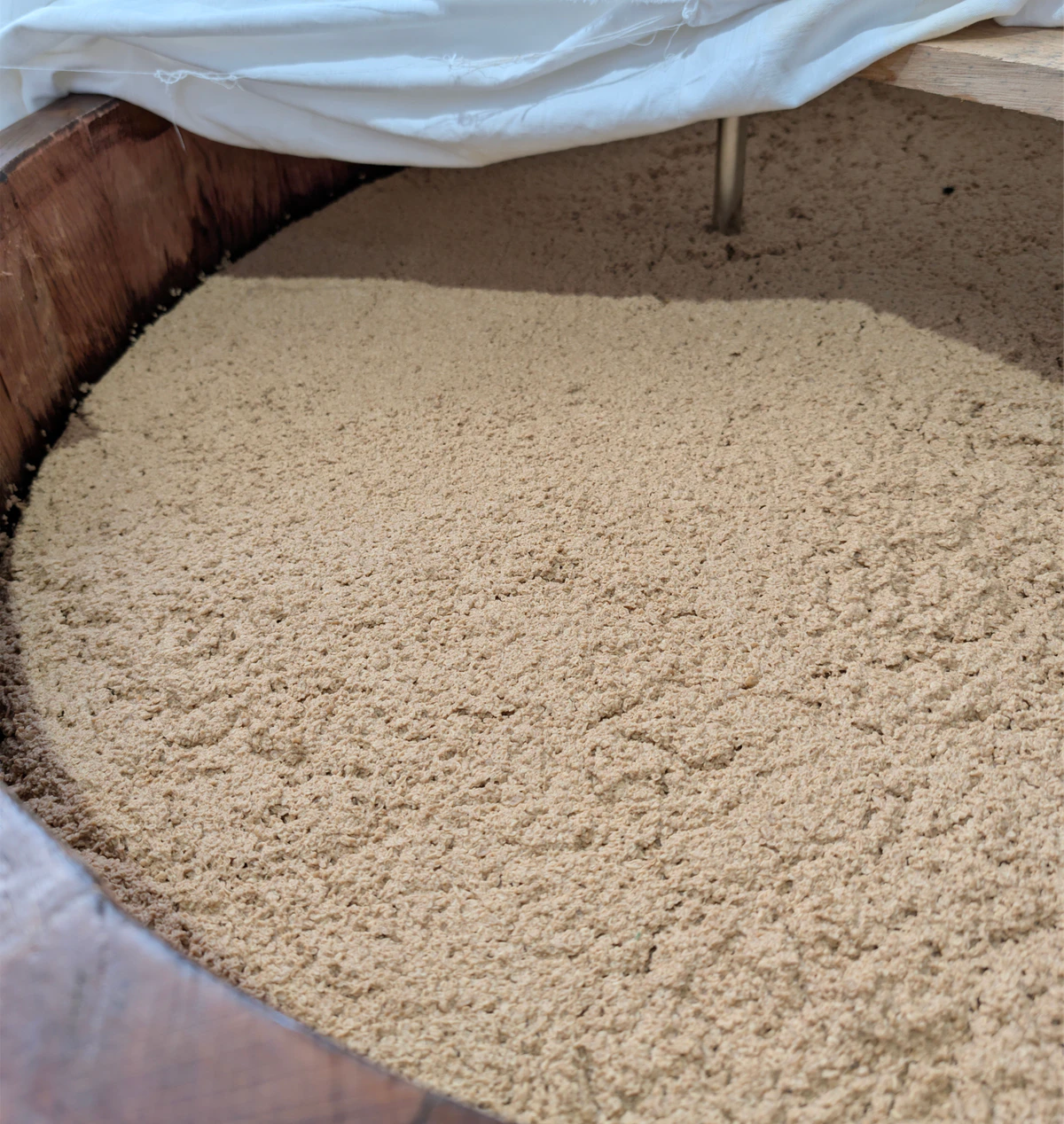
Our first batches of this product are only a hint of what is to come - these are the pilots for what we hope to iterate on, improve, stack with even more and more flavour for every release that we do - we hope to some day perfect it. At the end of the day, its just something really new. The jaggery is from Tully, QLD. The rice is Australian Koshihikari. The koji is hand made in our distillery.
It's ours, and we think its genuinely bloody tasty.
For more about Kokuto Shochu, listen to the Japan Distilled Podcast Episode.